what was the series of events that caused nearly one million farmers to lose their farms
John Boyd Jr'southward grandpa Thomas, the son of a slave, slept with the deed to his farm under his mattress. He worried constantly that his land would be taken from him.
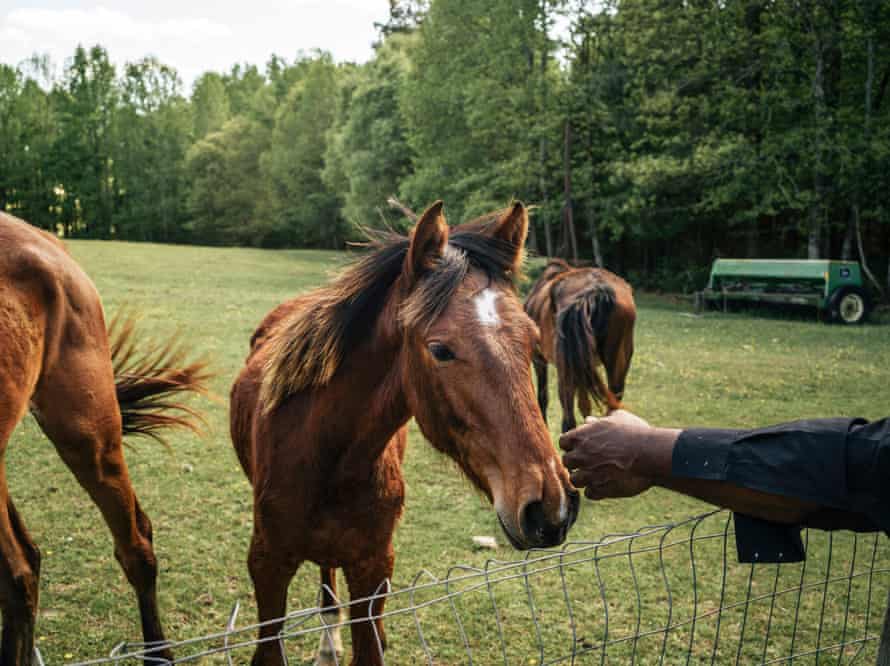
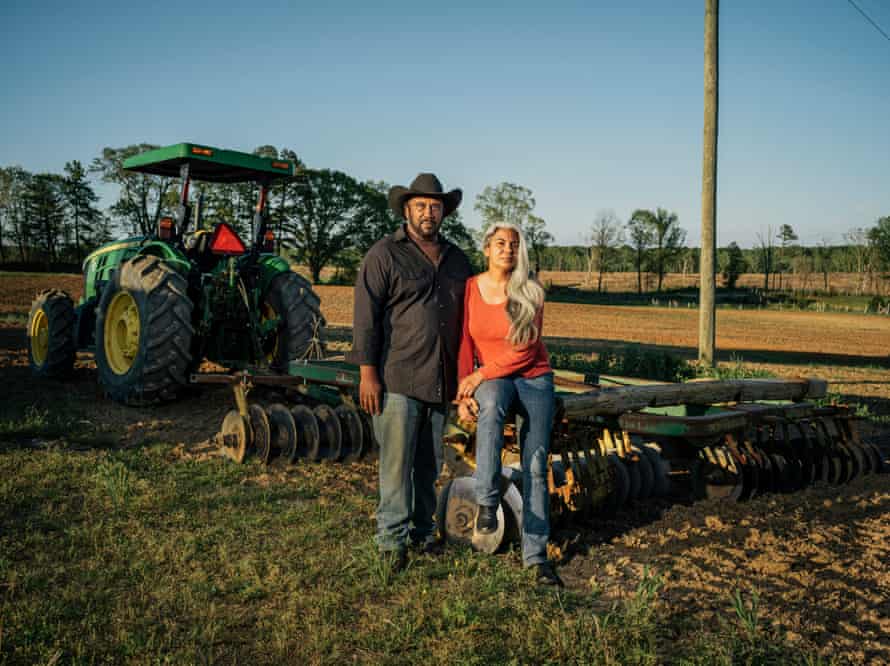
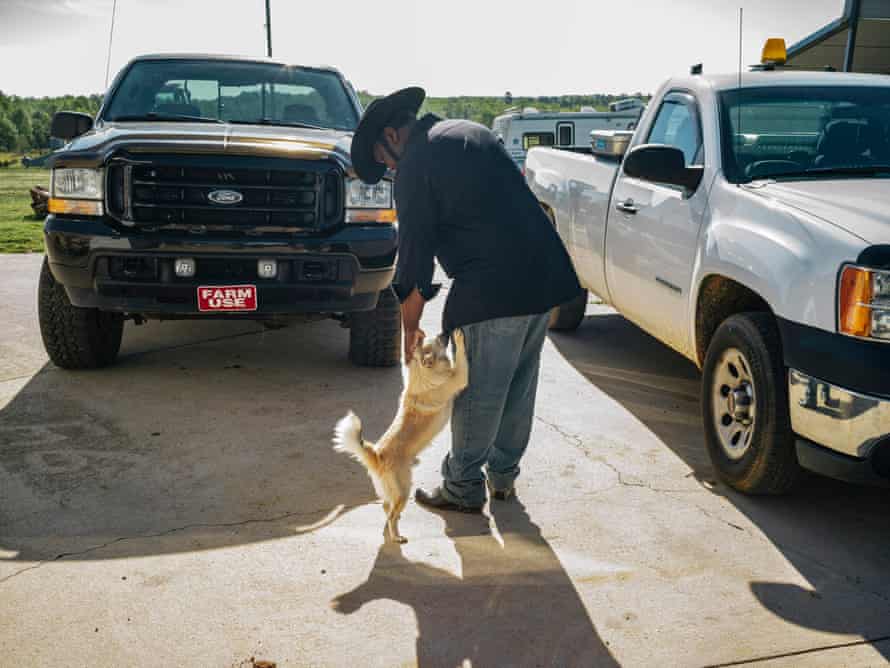
20 miles away and three generations later, Boyd lives on his own 210-acre farm, in a big white colonial house with rows of soybeans that go well-nigh upwardly to the front door, similar other people have grass. One hundred cattle, a cluster of guinea hogs, 3 goats and a modest herding domestic dog named Fatso, whom Boyd calls his best friend, alive at that place.
He feels more secure on his plot of country than Thomas did. But Boyd is an aberration.
The number of black farmers in America peaked in 1920, when there were 949,889. Today, of the country's iii.four million total farmers, only 1.3%, or 45,508, are black, co-ordinate to new figures from the United states Department of Agriculture released this month. They own a mere 0.52% of America'south farmland. Past comparison, 95% of U.s.a. farmers are white.
The black farmers who have managed to concur on to their farms eke out a living today. They make less than $40,000 annually, compared with over $190,000 past white farmers, which is probably because their average acreage is about one-quarter that of white farmers.
As a fourth-generation farmer, Boyd has witnessed other black farmers do the same thing he's done: claw at the clay in an endeavour to hold on to it. And Boyd has devoted himself to helping other black farmers, always remembering the words he heard his grandfather Thomas mumble over and over: "The state don't know colour. The land never mistreated me, people do."
Today he's come to understand two things: how the long fight he put up is but a drop in a rusted-out bucket, and exactly why there are and then few black farmers left.
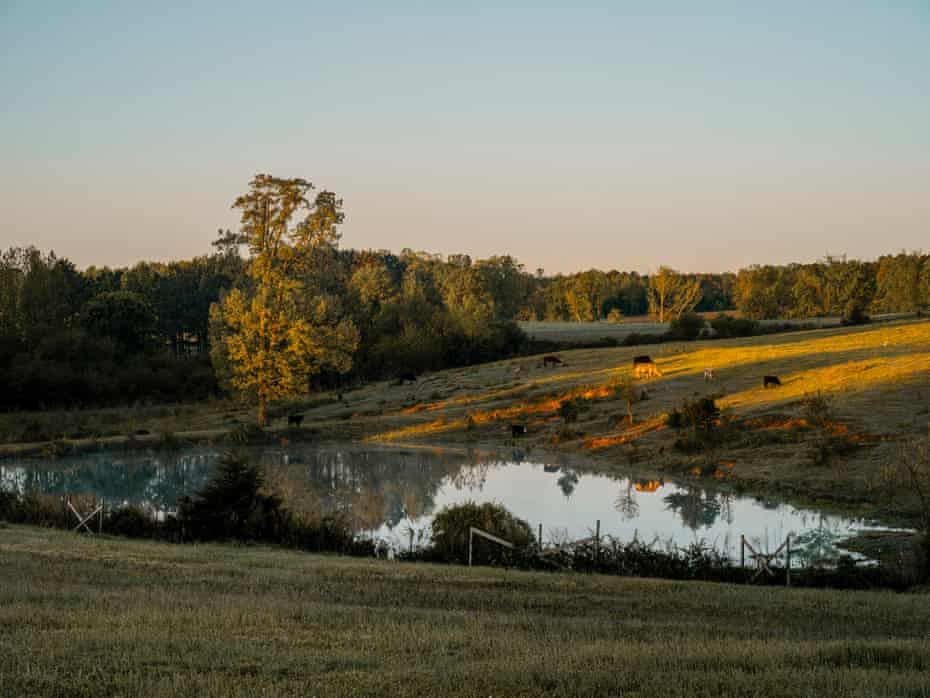
In Baskerville, Virginia, huge sunrises plough ponds into peppery gulfs. Strangers in cars moving ridge as they pass. Nutrient is fried and smothered. Things move slowly. This is also Trump country, with back up displayed on bumper stickers and hand-painted roadside signs. "Dixieland", every bit Boyd calls it, has palpable racial tension.
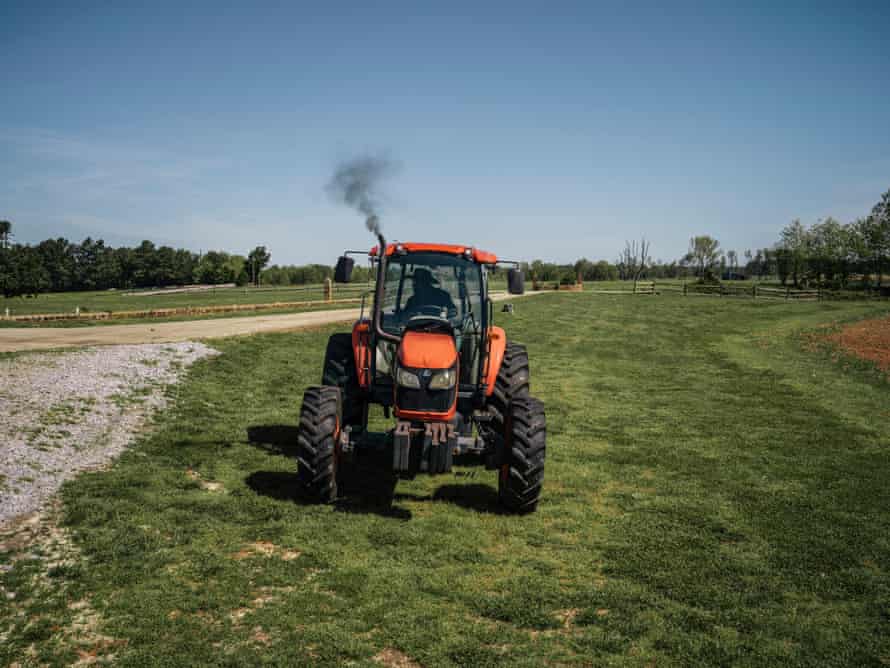
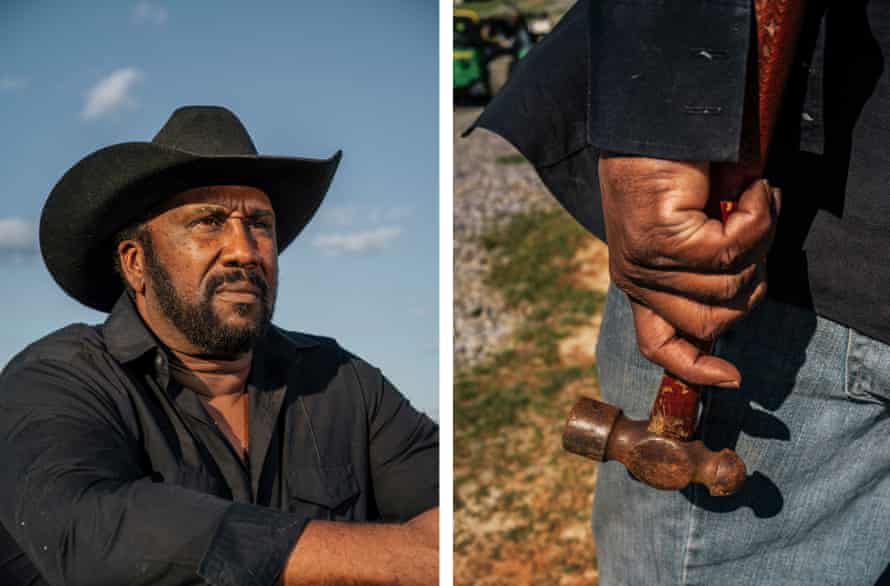
He is a big man with deep-ready eyes usually in the shadow of a cowboy hat brim. His vox could rumble floorboards. Boyd, 53, seems most content bouncing in the seat of his tractor, fume tufts marking his trail. He'll harvest the soybeans he's busy planting today in the fall, in one case they're most knee-high.
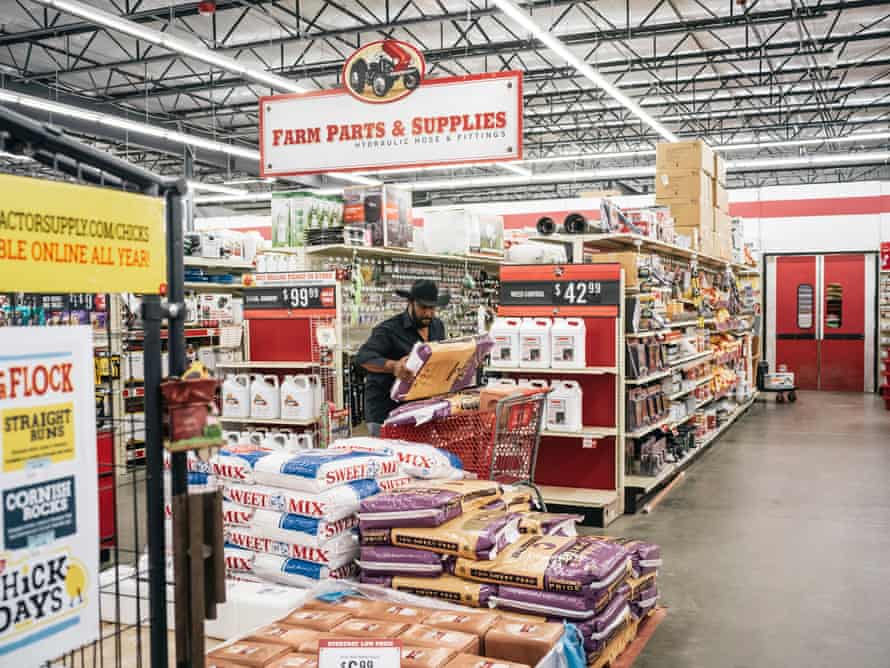
He needs 45 bushels from each acre to make a profit. To avert beingness docked – getting priced down for wet or droppings in the bushels – he will ask his wife, Kara Brewer Boyd, to enlist her white stepfather to sell the beans for him. When the other man takes Boyd's beans, he's not docked only complimented.
"I lose money if I sell them myself," he says. "In 2019, that shouldn't be happening. I shouldn't exist losing coin because I'm blackness."
Boyd'south had time to get used to this mistreatment. His struggle for equal footing started as soon as he bought his get-go farm for $51,000 at age 18 in 1984. He went to the Farmers Home Administration, a lending co-operative of the USDA, nigh 90 miles from Baskerville to employ for operating loans. Year after twelvemonth, his applications were denied or delayed.
"Looked at your application and we own't gonna exist able to help you this year," he says the loan officer would tell him. Once, Boyd says, a white farmer interrupted their meeting, exchanged quick pleasantries with the loan officer, and walked out, having not even applied, with a check for $157,000. "And I'm begging for $five,000," Boyd recalls, shaking his head.
In subsequent visits, the loan officer told Boyd he better larn to talk to him like other black folks did, took naps during meetings, threw Boyd'southward applications direct into the trash and spat his chewing tobacco on Boyd's shirt, claiming to have missed his spittoon.
The officer just took meetings with the nine blackness farmers in the county on Wednesdays. "He would leave the door open and speak loudly and boastfully then that we could hear just how bad he was talking to each i of usa," Boyd says.
Boyd filed six complaints against the officeholder for discriminatory treatment and somewhen the USDA Ceremonious Rights Office of Virginia investigated the officer, who admitted to the treatment Boyd noted in his complaints. Boyd then filed and won the first-ever bigotry lawsuit against the USDA.
The successful investigation on Boyd's behalf prompted other black farmers to come forrad with their stories, and in 1995 Boyd founded the National Black Farmers Association later on coming together with many black farmers and hearing like USDA experiences.
"All these farmers were coming out of the woodwork saying, 'Y'all recall what happened to you is bad? Y'all should hear my story!'" he says. "I was merely trying to save my subcontract. Only then I saw this was a huge national outcome."
In 1997, Boyd and 400 other black farmers sued the USDA in the landmark lawsuit Pigford v Glickman, which alleged that from 1981 to 1997, USDA officials ignored complaints brought to them by black farmers and that they were denied loans and other support because of rampant discrimination. In 1999, the government settled the case for $1bn, and more than xvi,000 blackness farmers received $50,000 each.
Simply Boyd didn't know his work was just get-go.
Afterwards that settlement made news, more than black farmers came forward saying they didn't know nearly the lawsuit in fourth dimension to apply for the money. This time, Boyd wasn't a plaintiff but an abet on behalf of more than lxxx,000 late claimants. In 2000, he began making trips to Washington to wait in hallways for politicians whose faces he'd studied in congressional dictionaries, hoping to find a sponsor to push to reopen the case. "That was a lone boxing out at that place on Capitol Hill. That was a bunch of lonely meetings," he says.
He drove his old Mercedes the 200 miles to Washington, sometimes two or three times a week. When that approach seemed too subtle, the trip by mule and carriage took 17 days. By sputtering tractor, information technology took five. Sometimes he slept exterior Capitol Hill in the railroad vehicle. Sometimes his cousin Ernest kept him company on the trip. Other times, farmers and their wives came with signs bearing slogans similar, "Black farmers accept waited long enough."
Meanwhile, he went to funerals of older blackness farmers who died hoping for compensation. His own crops and relationships suffered, most notably with his children.
"There were a lot of down times where I would go domicile and [Congress] would have recess and I would run across family unit members. 'Are you still working on that? Man, you need to requite that up. Y'all ain't never going to win that,'" Boyd recalls them telling him. "At that place were many times where I said, I don't know if I desire to do this whatsoever more."
Finally, after viii years, Boyd got then-Senator Barack Obama to exist the atomic number 82 sponsor of the measure out to reopen the example, and Congress fix bated $100m to assess the late claims. In December 2010, every bit president, Obama signed a pecker authorizing $i.25bn in compensation to the late claimants, settling the lawsuit known as Pigford Two.
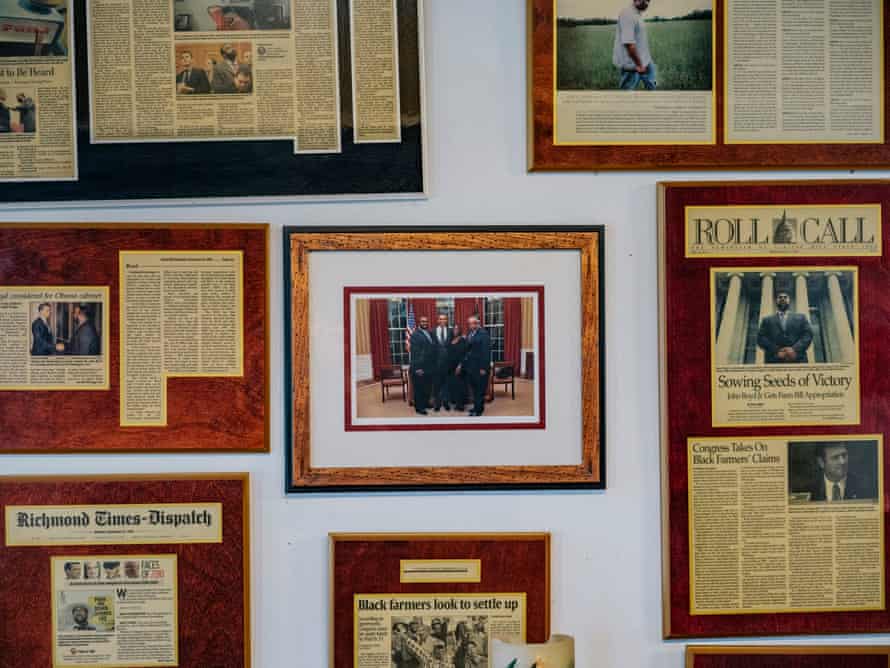
The bill and a photo of Boyd shaking hands with Obama hang framed near the fireplace in his brick-floored living room. The pen Nancy Pelosi used to sign it is around the house somewhere, too. For Boyd, that moment, the ink absorbing into the newspaper, was the peak, the advantage.
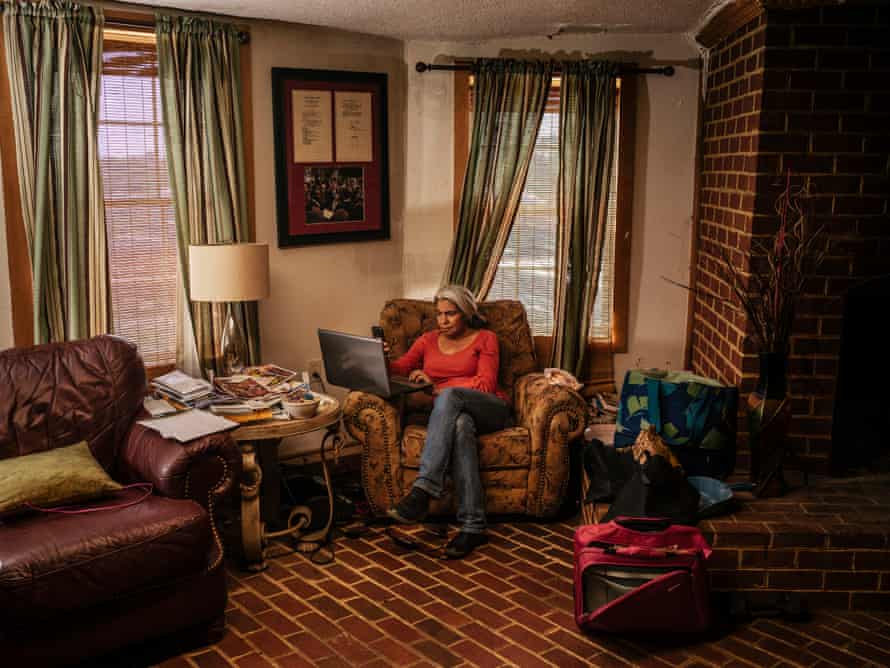
Terminal November, Kara Boyd fell comatose in the recliner in the living room with her laptop open up the dark before the NBFA briefing. She was in the throes of a almost-all-nighter, getting last-minute details set.
Into the evening, she'd been on the phone with the printer making sure the welcome letter from Shreveport'due south mayor, boasting that the briefing would draw more than 700 members from 42 states, was in the briefing booklet. The Boyds see this free annual gathering as a gamble to forge a support network for blackness farmers, and outline the USDA resources available to them. Their intentions and those of attendees haven't always aligned.
Within the lobby of a hotel in downtown Shreveport, Louisiana, Boyd wore his favorite hat – the rigid blackness size 7.v Stetson – and a pressed black adjust. He was holding a cup of coffee, as usual, and shaking hands. But he was distracted and looking around, seemingly to gauge who'd shown upward. The audience of mostly men saturday at half-total or empty linen-covered banquet tables. Some had put on suits with their cowboy boots, some of the wives were dressed for church.
Throughout the two-day conference, Kara and USDA and bank representatives, who past blueprint were more often than not black, led discussions on how to utilize for various loans, how to obtain a farm serial number and get wills in society.
Two older women came in an hour late, after driving from Alabama x hours overnight through a storm. They slowly sat down, whispering to other attendees, "Has he gone over the lawsuits even so?"
People have shown up to every conference believing they can yet fill out an application for the $50,000 from the Pigford II case, but the deadline was six years ago. Some farmers mistake the postcards announcing the conference for calls for applications, "because they're older and at that place's a lot of illiteracy", Kara says, matter-of-factly.
The NBFA grant recipient Michael Coleman, 25, runs fourteen caput of cattle in Mississippi and majors in animal science at Alcorn State Academy, a historically black school. He presented a PowerPoint on cattle husbandry.
"These white cattle farmers are so much ahead of united states of america it's like we're playing grab-upward. They already know how to become the grant money, they already have old money," Coleman says. "I mean, my dad was a sharecropper who worked 40 years in a manufacturing plant 12 hours a 24-hour interval. Growing upwardly, my father didn't know almost these programs."
Nearly half of all black-owned farms are cattle operations, just with and then few black farmers overall, the crowds at livestock markets are mostly white. "I haven't been chosen out my name," he says, using slang for a racial slur, "simply I'm not too sure how they treat or price the animals once they figure out you're a black farmer," Coleman says.
His family'due south iii-acre plot of land is split amidst relatives – a common situation beyond black farmers, who oftentimes lacked admission to legal resource and passed along their property without a will or articulate championship. Unclear ownership can lead to major problems, including not being able to receive a farm serial number from the USDA, which is needed to apply for whatsoever federal loan and other financial aid programs. According to the Demography Bureau, eighty% of land owned by black people has been lost since 1910 due to this issue.
A breakthrough came when the 2018 farm nib was signed into law a few days before Christmas, making it possible for farmers to show other forms of documentation besides a will to become a farm serial number.
On the concluding day of the Shreveport conference, Coleman, in a dainty grey suit, received a loud applause for his presentation. So Kara announced it was time for lawsuit updates, and passed the microphone to Boyd.
Speaking more slowly than he had the whole briefing, he intoned, "I wanna do this considering I'm frustrated. Every meeting I walk into, people are request me, 'When tin can I get my check?' And it's not truthful."
There is a website prepare on the order of Approximate Friedman, who presided over the first Pigford case, which states, in bolded text, that the Black Farmers and Agriculturalists Association has been telling farmers they can even so apply for the $l,000 if they mail in $100. It's non but inaccurate, it'south too a heartbreaking scam, according to the approximate.
Every bit Boyd spoke, Kara pulled up the site on screen and asked everyone to prove it to someone else, so they would know definitively that the case is closed.
"Nosotros have people out hither taking advantage of elderly black people," Boyd raises his voice. "Why would you lot ship someone $100? Do not do that!"
Kara rattled the number for Judge Friedman's clerk off the top of her head in example anyone had lingering questions. It is just a recorded message stating the case is settled and done.
"I'yard merely giving you lot the facts. Am I being articulate today?" Boyd asked. "Mmmhmm," the farmers respond collectively. He repeated twice: "Nothing is pending in court. The case is airtight and settled."
Dorsum dwelling in Baskerville, Kara reflected on the conference. "Information technology went well. There was no drama. There was no confrontation. No one left upset," she says. "They came this year with the understanding that the case has been settled."
She will keep to answer the calls she gets every day nigh the money. That evening, it is a man from Alabama. Through a tangle of words he finally gets beyond to her that he's heard about the $50,000. "For black people working on farms … I idea they'd reopened information technology and everything? … Ah, information technology's already closed out? … Oh, OK."
"And don't pay anyone $100 for an awarding because the settlement is over," Kara replies. "I tin can give y'all the number to the claims ambassador and so you can hear it from them every bit well."
"Oh, I believe you, ma'am," he assures her, and hangs up.
Boyd has been request since 2017 for a meeting with Trump's agronomics secretarial assistant, Sonny Perdue, to no avail.
"I'd like to ask him why does it take then long to receive benefits as a black farmer? I know white farmers in my community who went through the same plan [for a soybean subsidy] and had their money a long fourth dimension ago. I'm still waiting."
The new USDA demography data shows a small fasten in the number of black farmers, from 44,609 in 2012 to 45,508 in the 2019 written report, but Boyd is unimpressed.
"They're non getting any coin. that doesn't fix annihilation," he says. "Farmers need operating money every year. You demand credit every year. We demand access to credit. Nosotros're clearly non getting it," he recites similar a mantra.
For Boyd himself, ever the abnormality, the outlook seems a lilliputian less bleak.
His only son (he also has a daughter, Sydni, 14) John Wesley "Wes" Boyd Iii, 27, helped with the harvest last fall. He's been splitting his time over the last year or so between Baskerville and Richmond, an hr and a half away, where he has 12 credits left to stop at Virginia Commonwealth University.
Before he was a yr old, Wes's mom took him and left the farm – largely because of financial frustrations, Boyd says.
"The guy'southward never been in a tractor until last yr. And information technology wasn't because I wasn't trying to throw his donkey in there, considering I was," Boyd says well-nigh his son. "Whites males practise just a piddling better getting their kids into the tractor. My kids never saw me do zip but struggle to stay on my farm."
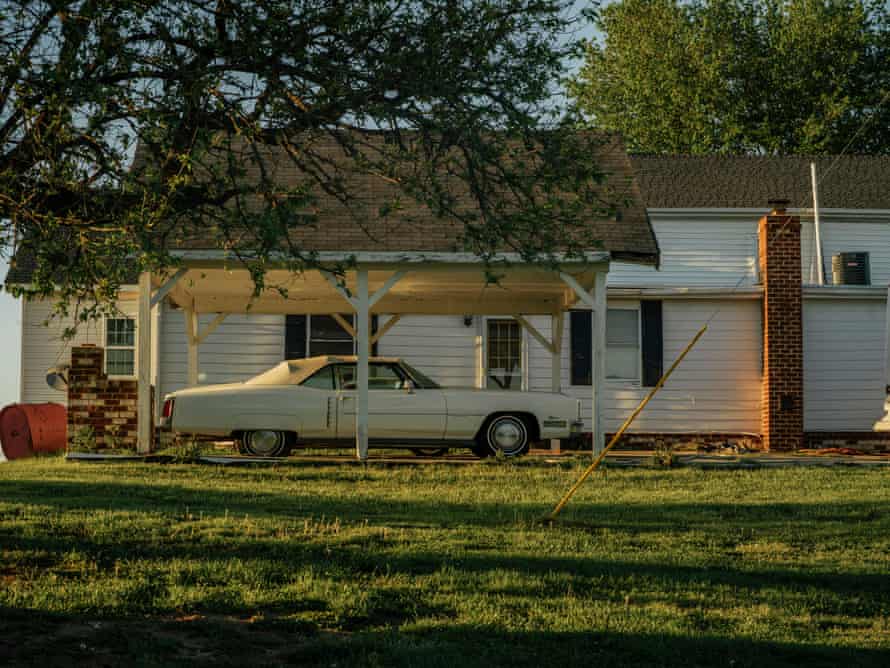
Boyd'southward years of advocating in Washington were a sacrifice.
Wes remembers it clearly. "When I was like 12, it was the showtime time my dad was similar, 'I'm really non coming this weekend to get you lot. And so that became more regular for the adjacent few years," Wes says. "I was just really uninterested in going down there, not specifically to avoid farming, just just because I was mad at my dad."
A year and a half ago, when the History Aqueduct began filming a reality show about American families who farm, Boyd asked for his son to be featured. "That was the first time he was like, 'I want you here,'" Wes says. "And that was when I really started … I mean, our bonding is very recent. Very recent."
Wes moved into a trailer concluding yr beyond the street from a smaller, 160-acre plot in Baskerville that Boyd owns. His double-cuffed slim jeans awkwardly remainder on summit of a borrowed pair of his dad'south cowboy boots. "I usually wear Vans," he says.
In one case he graduates, Wes wants to focus on farming, and plans to ask his dad for x acres of land and 10 cattle, try for an operating subcontract loan and and then slowly pay his dad back.
Boyd has cautioned him about the bigotry he'll face: "It's similar, 'I'thou going to teach yous how to walk and talk and behave yourself and demand a certain level of respect, and and so that when it does come up, you can hold your ground,'" Wes says. Boyd needs him to get up to speed fast.
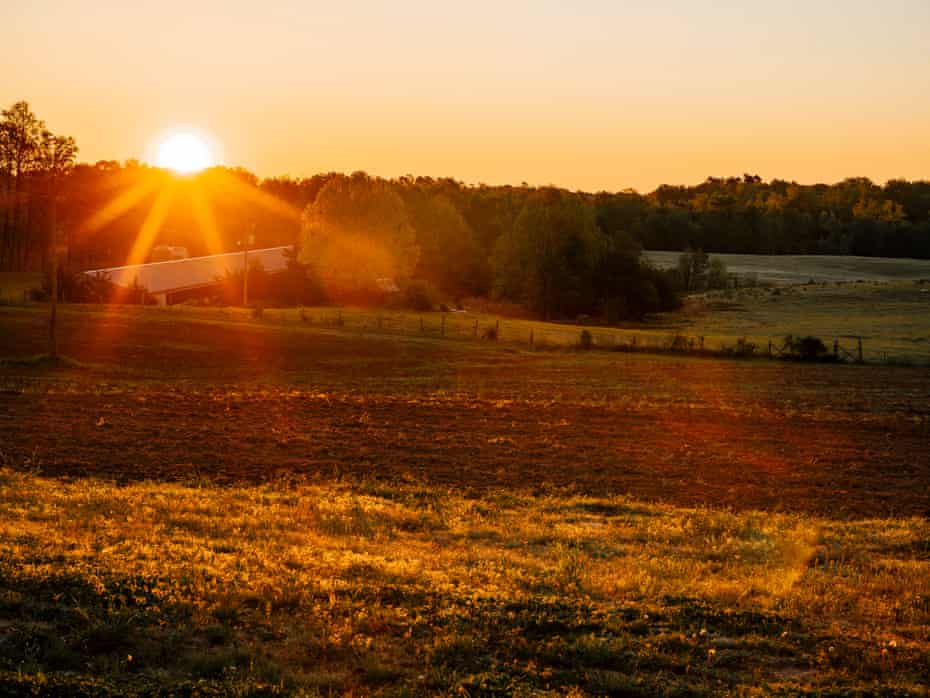
A 15-minute drive from the main property, past a cluster of one-room clapboard cabins falling in on themselves, is Hardage Subcontract. It used to exist worked by slaves. Pools of water dammed off the Roanoke River basin form lakes that look like mirrors arranged carefully around its wild 886 acres. With the mineral-rich soil, yields should be high. Boyd has plans for tobacco, soybeans, recently legalized hemp and a hydroponics system.
The Boyds signed a purchase agreement for Hardage in October and finally closed the deal on Friday. It is the largest property a Boyd has ever owned.
mitchellcominved59.blogspot.com
Source: https://www.theguardian.com/environment/2019/apr/29/why-have-americas-black-farmers-disappeared

Post a Comment for "what was the series of events that caused nearly one million farmers to lose their farms"